
Exploring the future of emotionally intelligent aesthetic systems.
Eunoia Lab investigates how AI-personalized interfaces influence identity formation, emotional trust, and digital self-perception through human-centered design.
Investigating how personalization systems shape identity, emotion, and aesthetic behavior.
Emotional UX
Studying how interfaces influence emotional trust, attachment, and behavioral engagement.
Identity Systems
Exploring algorithmic self-presentation and AI-mediated identity formation.
Human-Centered AI
Designing adaptive systems that prioritize emotional intelligence and trust.
Computational Aesthetics
Investigating beauty, perception, and emotional resonance in intelligent systems.
Exploring how emotionally intelligent systems influence identity, trust, and aesthetic behavior.
How do AI-personalized beauty systems shape self-perception?
Investigating how adaptive recommendation systems influence confidence, aesthetic decision-making, and identity construction through repeated interaction.
What creates emotional trust in human-centered AI interfaces?
Exploring the interface behaviors, language systems, and personalization strategies that increase emotional comfort, perceived empathy, and long-term engagement.
Can aesthetic systems become emotionally intelligent environments?
Studying how adaptive mirrors, ambient interfaces, and computational aesthetics can create emotionally responsive experiences across beauty, wellness, and lifestyle.
Speculative interface systems for future aesthetic intelligence.
Eunoia Lab develops conceptual frameworks investigating how adaptive aesthetic systems influence cognition, emotional trust, and self-perception.
Current explorations include emotionally responsive mirrors, personalized beauty recommendation systems, and ambient aesthetic intelligence.
See ConceptsPrototype
Adaptive Mirror Interface
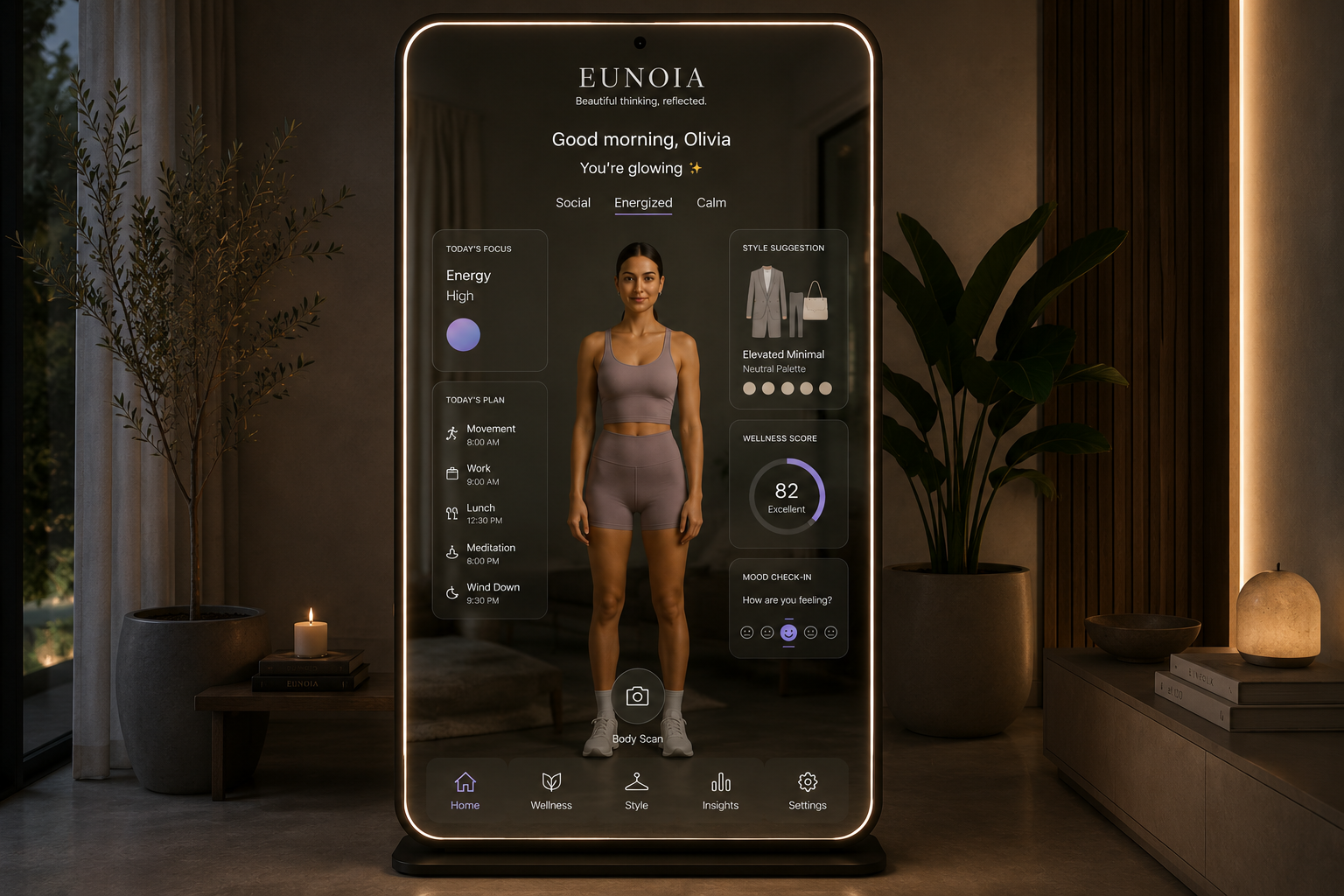
Concept Prototype v0.7
The design behind Eunoia, an intelligent mirror.
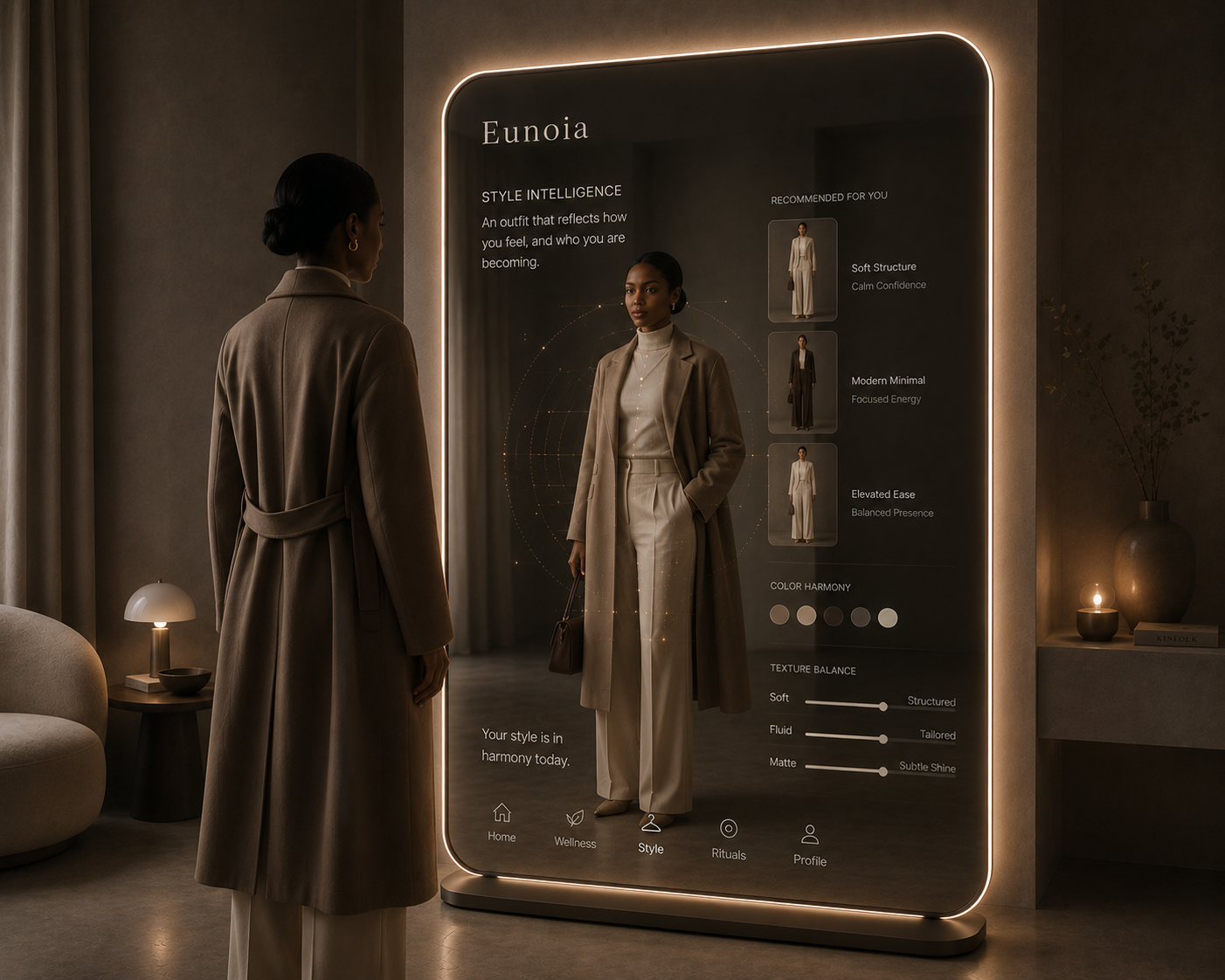
Product Design · Strategy to System
Designing an AI that knows when to hold back.
The product design behind Eunoia, an intelligent mirror: how restraint, legibility, and a clear line on control make an aesthetic AI trustworthy. Four concept screens, one flow.
Read Case Study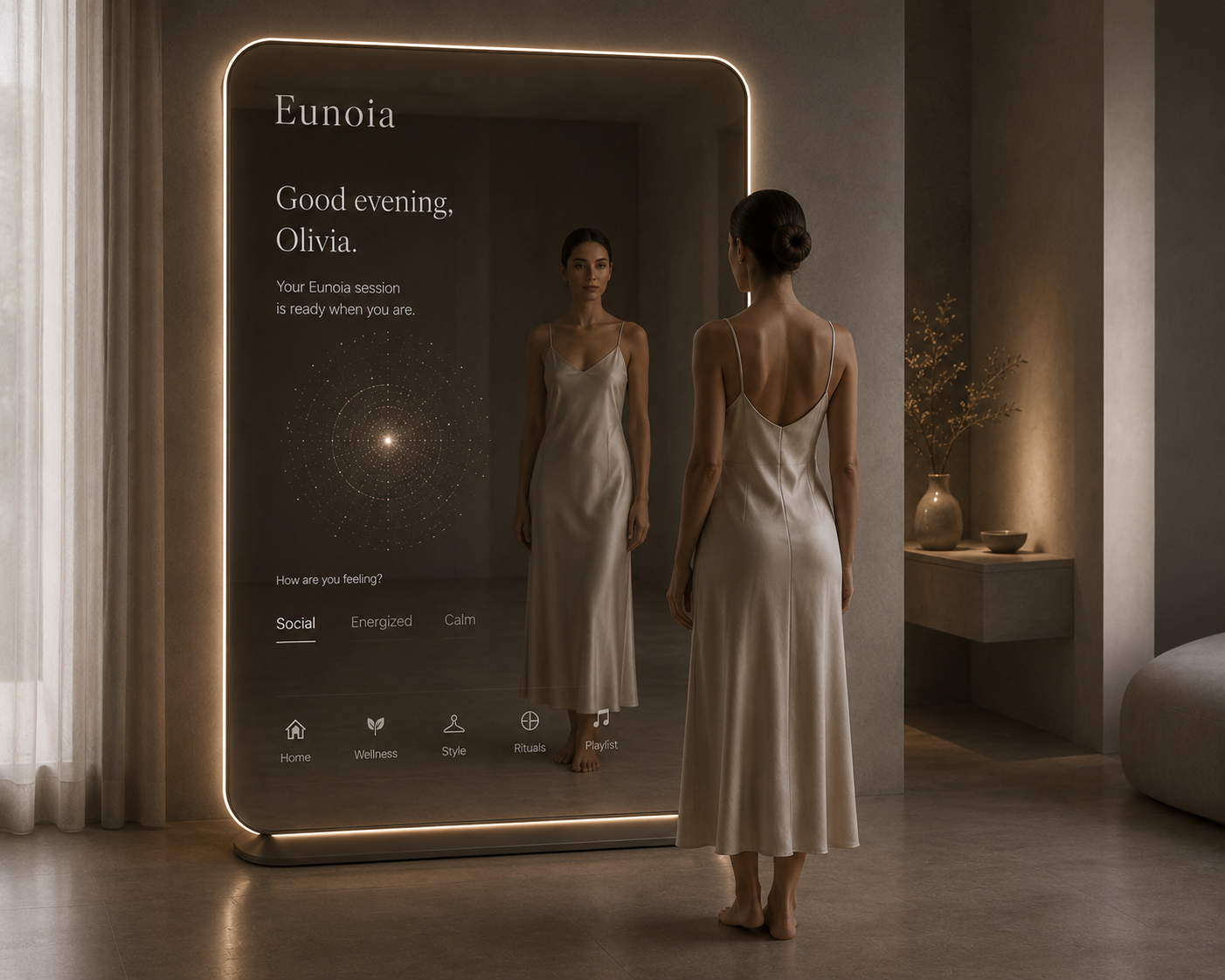
Content Design · Voice & UX Writing
How language makes an AI system feel trustworthy, human, and yours.
A close study of the words behind Eunoia: the voice principles, microcopy, and interaction language that turn an intelligent mirror into something that feels personal, calm, and genuinely yours.
Read Case StudyContent Design & UX Writing · Every State
The states a companion would rather skip.
The microcopy behind Eunoia across every state it ships in: the empty screens, the misreads, the boundaries, and the quiet successes in between. Forty-plus strings, held to one voice.
Read Case StudyExperimental systems exploring identity, emotion, aesthetics, and adaptive intelligence.

Concept 01
Emotionally Responsive Mirrors
Investigating interfaces that respond to emotional context and aesthetic behavior — surfacing mood-aligned outfits, affirmations, and wellness cues in real time.

Concept 02
Identity-Aware Styling Systems
Exploring recommendation systems that evolve alongside self-perception and emotional identity — tracking style evolution and confidence trends over time.

Concept 03
Ambient Aesthetic Intelligence
Researching ambient systems integrating wellness, music, beauty, and emotional personalization — from soundscape to lighting, scent to vibe.
Writing at the intersection of AI, aesthetics, identity, and emotion.
The Confidant Standard: Emotional Trust in Aesthetic AI
A working paper proposing a four-part framework for emotional trust in high-stakes aesthetic recommenders, with an evaluation method and a proposed study. Developed from the exploration on emotional trust in beauty interfaces.
A Pilot of the Systematic Walkthrough
A single-analyst audit of the paper's Study 1 codebook: four real interfaces, each scored against the four commitments twice, once leniently and once strictly. Where the two readings part is where the codebook needs fixing before real raters are recruited.
Why Personalization Systems Are Becoming Identity Systems
Exploring the psychological implications of emotionally intelligent recommendation systems and what it means when algorithms begin shaping identity, perception, and self-understanding.